
An Outstanding World War II Flying Ace
On April 17, 1915, farmer Frank Ole Foss, and his lovely wife Mary Ester Lacey Foss, welcomed young Joseph Jacob Foss into the world near Sioux Falls, South Dakota. It was a lovely spring day full of promise and sunshine. As Joseph grew up his friends quickly nicknamed him "Joe." It stuck!
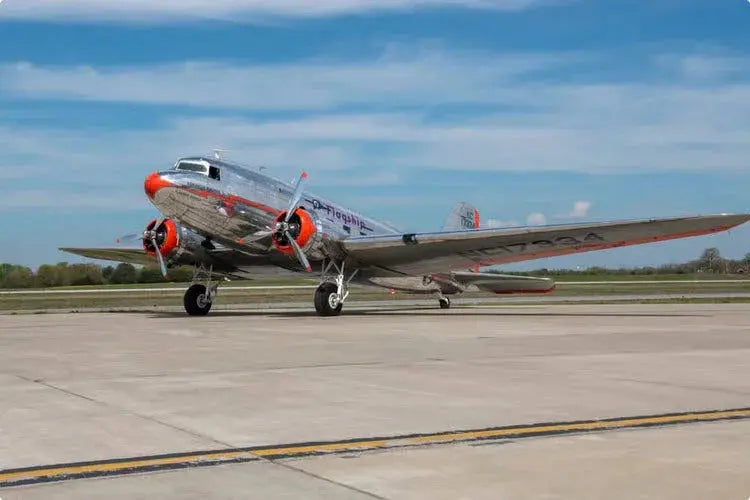
In 1927, at the age of 12, Joe saw Charles Lindbergh touring with the Spirit of St. Louis in Renner, South Dakota. In 1931 Joe and his father Frank paid $ 1.50 at Black Hills Airport for a flight in a Ford Trimotor piloted by Clyde Ice. While in high school in 1932 Joe Foss went to an air show put on my a squadron of Marine pilots at the Sioux Falls airport.
Young Joe Foss was a bright young lad who loved sports. He studied hard and after graduation from Washington high school in Sioux Falls, he enrolled in Augustana College for one year followed by three semesters at Sioux Falls College. In 1935 Foss paid $ 5.00 to take a flight with a local barnstormer.
Having been bit by the bug, Foss made an arrangement with an installment plan of $ 65.00 to take his first flying lessons. Occasionally he would rent a Taylorcraft, and in 1939 took a Civil Aeronautics Administration flying course at the University of South Dakota. By the time he graduated he had a Private Pilot's license and had accumulated about 100 hours of flight time.

An advertisement for an early Taylorcraft showing performance and price.
But Foss had higher goals in mind, so he enrolled at the University of South Dakota, a public university in Vermillion, South Dakota, where he studied Business Administration. While at the university Foss was a member of the boxing, track and football teams. He graduated from USD in 1940 with his degree in Business Administration.
During his college years Foss enlisted in the South Dakota National Guard and served from October of 1935 until March of 1940 as a Private assigned to the 147th Field Artillery Battalion. Three months later he hitchhiked to Minneapolis, MN, in order to enlist in the U.S. Marine Corps Reserves to join the Naval Aviation Cadet program and earn his wings. Foss was one of 28 who were applying, but only Foss and one other were accepted into the program on June 14, 1940.
Because of his prior military service he was promoted to private first class the following day, assigned to active duty as an aviation flight student. The next step was to complete the Marine Corps elimination flight training successfully, which he did, upon which he became an aviation cadet.
Aviation Cadet Foss was then sent to Naval Air Station Pensacola, Florida, for pilot training on August 8, 1940. Upon completion of his flight training he was awarded his gold wings as a Naval Aviator, Foss was commissioned as a 2nd Lieutenant (with the serial number O-06774) in the US Marine Corps Reserve. He then was posted to remain in Pensacola as a flight instructor. On April 10, 1942, Foss was promoted to 1st Lieutenant.
By this time Foss was considered too old to be a pilot, so he was sent to the Navy School of Photography and then assigned to Marine Photographic Squadron 1 (VMO-1) based at Naval Air Station North Island.
Not to be denied his dream of becoming a fighter pilot, Foss asked to be transfered to fighters. The request was granted, and Foss made the transition to the Grumman F4F-3 Wildcat. On August 11, 1942, Foss was promoted to Captain and then assigned to Marine Fighter Squadron 121 (VMF-121) as its executive officer. During this time period he also married his high school sweatheart, June Shakstad.

Grumman F4F-4 Wildcat, circa 1942. (U.S. Navy)
Grumman F4F-4 Aircraft Specifications:
- Length: 29 feet 10 inches;
- Wingspan: 38 feet 0 inches, Folded 14 feet 4 inches;
- Height: 11 feet 9 inches;
- Empty weight: 5,448 pounds;
- Max T/O weighte: 7,975 pounds;
- Max speed: 320 mph;
- Service ceiling: 34,900 feet;
- Range: 770 miles;
- Powerplant: one Pratt & Whitney R-1830-76/86 1,200 hp 14-cylinder, twin-row radial piston, air-cooled engine;
- Armament: 4 wing mounted Browning M2 .50 caliber machine guns with 240 rounds per gun and two 100 pound bombs.
Note: The Grumman F4F-4 had Sto-Wings, an invention by Leroy Grumman, which allowed the wings of the aircraft to be rotated and then folded back along the fuselage. This made storing these aircraft on the carrier easier.
VMF-121 was then sent to Guadalcanal in the Solomon Islands aboard the Bogue-class escort carrier the USS Copahee.

The Bouge-class escort carrier USS Copahee enroute to the Pacific Theater in WW II.
On October 9, 1942 VMF-121 twenty Grumman F4F-4 Wildcats took of from the carrier on a ferry flight to Guadalcanal's Henderson Field to relieve Marine Fighting Squadron VMF-223. The following day VMF-121 began flying combat missions.
Capt. Foss flew his first combat mission on October 13, 1942 and shot down a Mitsubishi A6M Japanese Zero; however, Foss now found himself a victim of some additional Zeros leaving his aircraft with a dead engine, no flaps and having minimum control of the airplane.
Capt Foss then flew F4F-4 Wildcat no. 03533 on a mission to intercept a Japanese air raid on October 25th and shot down two Zeros in the morning, followed by flying F4F-4 Wildcat no. 03444 in the afternnon and downing three more Zeros.
On November 7th Capt Foss took off flying F4F-4 Wildcat no. 02147 as one of a flight of twenty-one Wildcats escorting a formation of SBD Dauntless aircraft from VMSB-132, TBF Avengers and P-39 Airacobras armed with bombs to attack a "Tokyo Express" convoy of eleven destroyers.
What follows is a list of the aerial victories claimed by Capt Foss :
| Victory | Date | Location | Aircraft | Notes on claim |
| 1 | 10/13/42 | Guadalcanal | A6M Zero | First aerial victory claim. |
| 2 | 10/14/42 | Guadalcanal | A6M Zero | Second aerial victory claim. |
| 3 | 10/18/42 | Guadalcanal | A6M Zero | Third aerial victory claim. |
| 4 | 10/18/42 | Guadalcanal | A6M Zero | Fourth aerial victory claim |
| 5 | 10/18/42 | Guadalcanal | G4M1 Betty | Fifth aerial victory claim, became an "ace". |
| 6 | 10/20/42 | Guadalcanal | A6M Zero | Sixth aerial victory claim. |
| 7 | 10/20/42 | Guadalcanal | A6M Zero | Seventh aerial victory claim. |
| 8 | 10/23/42 | Guadalcanal | A6M Zero | Eighth aerial victory claim. |
| 9 | 10/23/42 | Guadalcanal | A6M Zero | Ninth aerial victory claim. |
| 10 | 10/23/42 | Guadalcanal | A6M Zero | Tenth aerial victory claim. |
| 11 | 10/23/42 | Guadalcanal | A6M Zero | Eleventh aerial victory claim. |
| 12 | 10/25/42 | Guadalcanal | A6M Zero | Twelfth aerial victory claim. |
| 13 | 10/25/42 | Guadalcanal | A6M Zero | Thirteenth aerial victory claim. |
| 14 | 10/25/42 | Guadalcanal | A6M Zero | Fourteenth aerial victory claim. |
| 15 | 10/25/42 | Guadalcanal | A6M Zero | Fifteenth aerial victory claim. |
| 16 | 10/25/42 | Guadalcanal | A6M Zero | Sixteenth aerial victory claim. |
| 17 | 11/07/42 | Guadalcanal | A6M2-N Rufe | Seventeenth aerial victory claim. |
| 18 | 11/07/42 | Guadalcanal | F1M2 Pete | Eighteenth aerial victory claim. |
| 19 | 11/07/42 | Guadalcanal | F1M2 Pete | Nineteenth aerial victory claim. |
| 20 | 11/12/42 | Guadalcanal | Twin Engine Bomber | Twentieth aerial victory claim. |
| 21 | 11/12/42 | Guadalcanal | Twin Engine Bomber | Twenty-first aerial victory claim. |
| 22 | 11/12/42 | Guadalcanal | A6M Zero | Twenty-second aerial victory claim. |
| 23 | 11/15/42 | Guadalcanal | F1M2 Pete | Twenty-third aerial victory claim. |
| 24 | 1/15/43 | Vella Lavella | A6M Zero | Twenty-fourth aerial victory claim. |
| 25 | 1/15/43 | Vella Lavella | A6M Zero | Twenty-fifth aerial victory claim. |
| 26 | 1/15/43 | Vella Lavella | A6M Zero | Twenty-sixth aerial victory claim. |
During his three month deployment Joe Foss made three engine-out landings as a result of damage to his Wildcat by enemy aircraft, including being shot down over the water near the island of Malaita. He was rescued by local fisherman. Unfortunately, Capt Foss contacted malaria and was shipped off to Australia for treatment.
In April of 1943 Capt Foss returned to the USA and was assigned to Headquarters, U.S.M.C. at Washington, D.C.
The Medal of Honor
On May 18, 1943, President Franklin D. Roosevelt presented Captain Foss the Medal of Honor during a ceremony at the White House, telling Capt Foss that the President of the United States takes pleasure in presenting the Congressional Medal of Honor to Captain Joseph J. Foss, U.S.M.C.R. for service as set forth in the following citation:

Capt Foss earned the Medal of Honor, Distinguished Flying Cross (DFC) and Air Medal with two gold stars. What follows is the Medal of Honor Citation (October 9 - November 19, 1942):
"For outstanding heroism and courage above and beyond the call of duty as Executive Officer of a Marine Fighting Squadron, at Guadalcanal, Solomon Islands. Engaging in almost daily combat with the enemy from October 9 to November 19, 1942, Captain Foss personally shot down 23 Japanese aircraft and damaged others so severely that their destruction was extremely probable. In addition, during this period, he successfully led a large number of escort missions, skillfully covering reconnaissance, bombing and photographic planes as well as surface craft. On January 15, 1943, he added three more enemy aircraft to his already brilliant successes for a record of aerial combat achievement unsurpassed in this war. Boldly searching out an approaching enemy force on January 25, Captain Foss led his eight F4F Marine planes and four Army P-38s into action and, undaunted by tremendously superior numbers, intercepted and struck with such force that four Japanese fighters were shot down and the bombers were turned back without releasing a single bomb. His remarkable flying skill, inspiring leadership and indomitable fighting spirit were distinctive factors in the defense of strategic American positions on Guadalcanal."

Captain Joseph J. Foss, United States Marine Corps, wearing the Medal of Honor. (LIFE Magazine)
Postwar
In December of 1945 Foss was relieved from active duty and remained in the U.S.M.C.R. (United State Marine Corps Reserve) until 1947. During 1946 he was appointed to the South Dakota Air National Guard as a Lt. Col to help establish the unit in South Dakota. While in South Dakota Foss flew a P-15 Mustang in their demonstration team.

North American P-51D-25-NA Mustang 44-73564, 175th Fighter Squadron, South Dakota National Guard, 1946.
This was followed by the Korean War where he was called up for active duty in the USAF with the rank of Colonel and served as the director of Operations and Training for the Central Air Defense Command, eventually being promoted to Brigadier General.
He then entered politics and served in the South Dakota legislature followed by election as the governor of South Dakota at the age of 39. In 1958 Foss ran for the House of Representatives, but lost to George McGovern.
Joe Foss passed away on January 1, 2003 at the age of 87 in Scottsdale, Arizona, followed by internment at Arlington National Cemetary on January 21, 2003, He is in section 7A, grave 162.,
I hope you enjoyed this trip through some of the history of sunglasses. If you enjoyed this trip, and if you are new to this blog, sign up to receive your own weekly blog post here: Subscribe here!
Until next time, keep your eyes safe and focused on what's ahead of you, Hersch!




Written by John M. White


Search this site
Recent Posts
-
Imagine Finding Yourself In A Freefall from 28,000 Feet!
July 31, 2026 -
The "Flying Laughters"
July 24, 2026 -
The Born Dynasty
July 10, 2026 -
John Franklin Bolt, USMC fighter pilot and ace in two different wars.
June 26, 2026

Leave a comment
This site is protected by hCaptcha and the hCaptcha Privacy Policy and Terms of Service apply.