
A World War Two Legendary Dogfight
On October 28, 1911, a young boy named James Julien Southerland the Second, arrived to his family in Narberth, Montgomery County, Pennsylvania. Bright eyed and bushy tailed, this young man loved sports and grew up with a yearning to join the military.
By 1936 Southerland had graduated from the U.S. Naval Academy at Annapolis, Maryland. During his time at the U.S. Naval Academy he acquired the nickhame "Pug." It turns out that Southerland was a pugnacios boxer at the academy. Upon graduation from the Naval Academy Southerland was sent to flight training to become a naval aviator.
If you were to happen to meet Pug, you would say he was a brilliant ray of sunshine. Pug was not big, but he could smack someone on their chin, or any kind of ball, just as hard as the larger fellas would have. He dabbled, and excelled, in many sports, including boxing, soccer, baseball, wrestling, and golf. He was a young man with many interests, and was really good at all of them.
In fact, when there was golfing weather, Pug would stand up his date and head for the golf course. Too bad for the doll he had a date scheduled with. During World War II while on leave somehow Pug could finagle five more days leave than any of the others in his group. He would always be in the middle of the town's best party, becoming the life of the party without even trying.
After Southerland won his gold naval aviator wings, he went on to train in a number of aircraft, eventually becomming a flight instructor for upcoming naval aviators. One of the aircraft Pug trained in was the Grumman F4F Wildcat.
The Grumman F4F Wildcat

The Grumman F4F Wildcat fighter flown by the US Navy in World War II.
Specifications:
- Wingspan: 38 feet;
- Length: 28 feet 9 inches;
- Height: 11 feet 10 inches;
- Empty weight: 4,907 pounds;
- Gross weight: 7,423 pounds;
- Engine: Pratt & Whitney R-1830-76 14-cylinder air-cooled radial engine rated at 1,200 hp;
- Propeller: 3-blade constant speed propeller;
- Maximum speed: 331 mph;
- Range: 845 miles;
- Service ceiling: 39,500 feet;
- Armament:
- Four 1/2 inch AN/M2 Browning machine guns with 450 rounds per gun
- 2 100 pound bombs and/or 2 58 gallon drop tanks
When the Second World War began, Lieutenant Southerland was selected to command a group of eight Grumman Wildcats and crews aboard the U.S. Saratoga as part of VF-5. Below is a photograph of the USS Saratoga enroute to the battle in the Pacific in World War II.

The USS Saratoga aircraft carrier of World War II at sea.
The Battle of Guadalcanal
On August 7, 1942, the United States began its assault on Guadalcanal and its neighboring Tulagi in the Solomon Islands. Soon the Japanese, who had a forward air base in Rabaul, sent 27 bombers and 17 escort fighters to bomb the U.S. Navy ships that were supporting the American attack.
In response, Lt. Southerland and his group were launched to provide fighter cover for the landing area. Due to planning errors, and the loss of so many planes on a training exercise, they were the only fighters around to provide cover for the landing. Southerland and his group launched from the USS Saratoga to intercept the Japanese bombers before they could reach the American ships.
Lt. Southerland then shot down the first Japanese aircraft of the Guadalcanal Campaign, a Japaneses G4M1 "Betty" bomber, for his first kill. He then shot down a second bomber for his second kill, but this time found himself in a tangle with a Japanese Zero.
He quickly manuvered to shoot down the Jap Zero, but his guns wouldn't fire, either from jamming or simply out of ammo. Defenseless, Southerland found himself engaged with two more Zeros, and they criss-crossed Southerland from opposite sides while a third Zero stayed nearby waiting to join the fray.
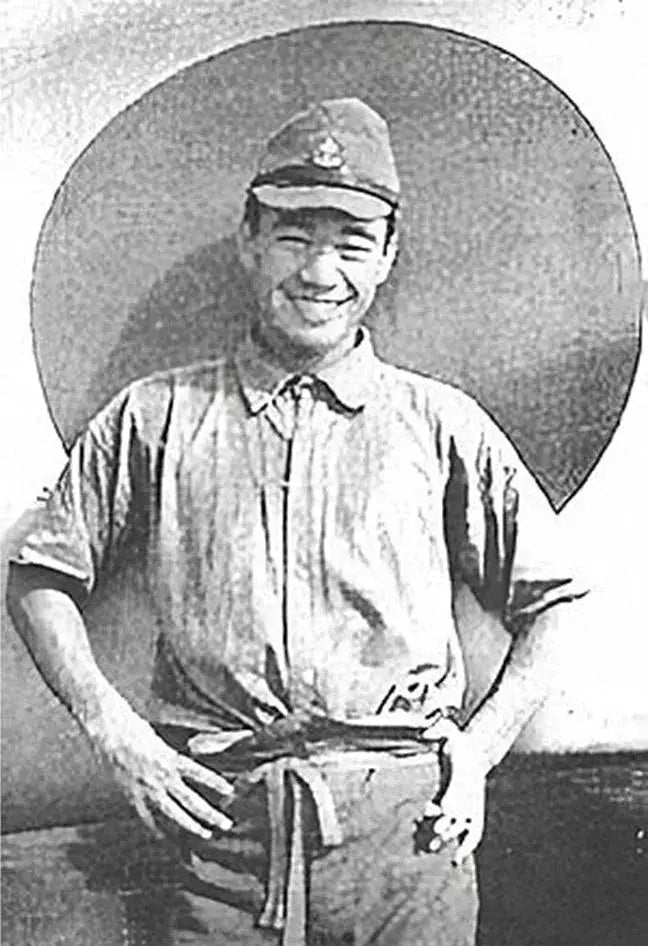
But, Lt. Southerland remaind cool, calm, and collected, and carefully exeuted his defensive maneuvers. That third Zero was piloted by nonother than Saburo Sakai, who now joined the battle. By this point in time Sakai had already scored 50 kills, and now had Lt. Southerland and his Grumman F4F in his sights.
A World War II Legendary Dogfight
As fate would have it, two outstanding pilots, Saburo Sakea from Japan and Lt. Sutherland, an American, found themselves locked in an epic dogfight. Both pilots realized that they had to push their aircraft to its absolute limit in order to survive. Sakai had many more kills, but Lt. Sutherland was one of the best pilots in his squadron.
While Pug Southerland had no combat experience yet, he was eage to engage the enemy and use the skills he had learned in actual combat. Admiral Yamamoto, who was too far away from Guadalcanal, knew it was at the extreme outer edge of the range of the Zero, but ordered 17 of them knowing it would be difficult to fly that far, engage the enemy, and return to base all on one tank of gas. Many considered it a suicide mission.
Unfortunately for the 17 Japanese airplanes, they failed to hit any of the U.S. Navy ships which were moving and difficult targets. Sakai was soon desperate to take down some enemy aircraft. Looking around, Sakai spotted an extraordinary dogfight several hundred feet below him.
It was Pug Southerland, neatly evading several Zeros with his incredible flying skills in the F4F Wildcat. Sakai dives down and joins the dogfight, firing a long range burst towards Southerland. Sakai had pumped 200 rounds into Southerland's Wildcat, but instead of turning into a ball of fire, the Wildcat flew on as though nothing had happened to it. Sakai couldn't believe what he saw. This was the beginnings of an epic battle of men, planes, and skill.
Immediately Southerland climbs towards the belly of Sakai's Zero, but as Sakai tried to throw Southerland off, Southerland was able to match each of Sakai's turns, turn for turn. Sakai turned to fill his gun sight for a cannon burst by accelerating closer to the Wildcat. Pug Southerland, however, put the brakes on and Sakai found himself 10 yards away from the Wildcat, trying desperately to slow down.
Pug Southerland had executed his trap well as now the Zero is in his gun sights. Sakai braced himself for the inevitable, but nothing happened! The Wildcat's guns remained silent. Sakai couldn't believe his luck and immediately took evasive action, pulled up next to Southerland's plane, saw that Southerland was wounded and his right shoulder was covered in blood. For just a moment Sakai hesitates to fire on Southerland.
But suddenly Southerland pulls up in a climb and Sakai knows he has to finish him off. Sakai was able to hit Southerland's aircraft just below the left wing root with his 20mm cannon, dooming the aircraft. Southerland knew his Wildcat was done for, and managed to bailout of the airplane, loosing his .45 caliber automatic pistol as it caught something in the cockpit on his way out.
Throughout their battle the upper hand passed back and forth between Sakai and Pug Southerland, but finally Sakai was able to shoot down Southerlands Wildcat. The range and speed of Sakai's Mitsubhishi A6M2, better known as the "Zero," allowed Sakai to get the best of Southerland in their spectacular dogfight. But, had Southerland's guns been working, he likely would have been able to shoot down the flimsy Zero.
Southerland found himself suffering some eleven wounds, unarmed, behind enemy lines, struggling through the bush, carefully evading Japanese soldiers. He finally reached the coastline where some natives found him, fed him, and treated his wounds. They then helped him to evade the enemy lines and finally reach the American lines, and from there he was evacuated by patrol boat the Henderson Field, Guadalcanal, on August 20th.
Shortly after Sakai's encounter with Pug Southerland, the limitations of the Zero were clearly on display when he was shot by a tail gunner from an American bomber. The tail gunner's .30 caliber bullets pierced the Zero's windscreen, went through Sakai's eye and brain, then exiting the other side of his skull.
Wounded and semi-concious, Salai was in desperate shape with little chance of surviving. But his skill, and the extreme range of the Zero, allowed him to make it back to Rabaul with little fuel remaining.
Going back to the dogfight between Sakai and Southerland, there was no way for the F4F Wildcat to match the Zero's turning abilities, climbing speed or range; but, the Wildcat made up for it with the raw power of it's 1,200 hp engine, superior diving speed, and an amazing ability to withstand extensive punishment.
Postscript
Sakai and Southerland survived their dogfight, and each went on to fight through the end of the war. By the end of the war Southerland had become an Ace with five kills, two Distinguished Flying Crosses, the Silver Star, the Legion of Merit and the Purple Heart.
On February 14, 1998, the wreckage of Southerland's Wildcat was found, and an examination of the remains confirmed both Southerland's and Sakai's accounts of the dogfight.
Both pilots managed to survive the war, and each of them wrote their accounts of their fight, which made it one of the best documented dogfights of World War Two. Sakai went on to write ten books and give numerous interviews. His most famous work is an autobiographical text, the Samauri of the Sky, which was made into a movie in 1976.
In 1949 Southerland was killed in a jet training accident during takeoff from an aircraft carrier off the Florida coast.
I hope you enjoyed this trip through some of the history of aviation. If you enjoyed this trip, and if you are new to this newsletter, sign up to receive your own weekly newsletter here: Subscribe here!
Unitl next time, keep your eyes safe and focused on what's ahead of you, Hersch!




Written by John M. White


Search this site
Recent Posts
-
The Perfect Gift Ideas for Pilots: From Sunglasses to Aircraft Models
October 03, 2026 -
Why Are Aircraft Wood Models Popular Among Collectors?
October 03, 2026 -
Jimmie Angel, Aviator, Explorer, Prospector
September 19, 2026 -
Imagine Finding Yourself In A Freefall from 28,000 Feet!
July 31, 2026

Leave a comment
This site is protected by hCaptcha and the hCaptcha Privacy Policy and Terms of Service apply.