
John Franklin Bolt, USMC fighter pilot and ace in two different wars.
On a sunny day in Laurens, South Carolina, on May 19, 1921, a boy was born to Thomas Crew Bolt and his wife Emma Bruce Bolt (nee' Bagwell). They named this little boy John Franklin Bolt, and welcomed him into the family. At the time the US economy was in the "Forgotten Depression," a post World War I economic contraction.
Due to the economic challenges in the post World War I the family moved south to Sanford, Florida in 1924. They settled in a rural farming community, and it was there that young John Bolt grew up and spent his formative years. It was a modest, but loving household, and by now Thomas Bruce Bolt, his younger brother, had joined the family.
By 1929 the Great Depression had begun which challenged the family resources limiting the opportunity for higher education for the two boys. But young John Bolt took on part-time jobs to help the family finances, and to support his own schooling. Times were tough for working-class families in those days, and everyone had to contribute in order to survive.
Since the age of 10 John was responsible for providing his own clothes and expenses as he grew up. One of John Bolt's part-times job was in a local creamery, sometimes working 30-40 hours a week to help the family survive. No doubt these experiences instilled a strong work ethic in John, shaping his early independence. If he wanted or needed something, he had to go and get it on his own.
Later on John F. Bolt would describe himself as a "workaholic," and was involved in a number of groups and social activities throughout his life. This was not unusual for the times, and he did manage to join the Boy Scouts growing up, and was able to spend two years studying at the University of Florida. But in 1941 he was out of money and had to drop out of college.
By now he was aware of the global tensions around the world that might lead to War, and motivated by a stong sense of patiriotism, John F. Bolt, on August 28, 1941, enlisted in the United States Marine Cops Reserve, specifically with a desire to enter the aviation cadet program. His early reserve time was spent in preparatory ground instruction and administrative processing. In November of 1941 Bolt was finally accepted as an aviation cadet and sent to Naval Air Station Pensacola for initial flight training.
The training was rigorous including instruction in navigation, aerodynamics, and aviation theory. This was followed by primary flight training to build up foundational flying skills. As one might expect, Bolt progressed through the program with ease, achieving his first solo flight during primary training, and moving on to the intermediate and advanced levels of flying skills.
His path emphasized single-engine aircraft, and included flying experience in the Stearman N2S biplane, the Brewster Buffalo, and the Grumman F4F Wildcat. He gained proficiency in formation flying, gunnery, and tactical manuevers that would be essential for fighter operations. He was, however, exposed to multi-engine aircraft, but his focus continued on in preparing for single-engine fighter roles. In August of 1942 Bold finally earned his Wings of Gold and became a Naval Aviator and a 2nd Lt. in the USMC.
His first assignment was as a flight instructor at Naval Air Station Jacksonville where he served until April of 1943. This was followed by transition into operational fighter training units which were focused on fighter aircraft proficiency and carrier-based procedures, a key requirement for Marine aviators during World War II. This phase emphasized tactical skills in frontline fighter aircraft, marking the completioin of his preparation as a Marine fighter pilot.
The Black Sheep Squadron
Major Gregory “Pappy” Boyington led VMF-214 in real combat. When he transferred to the Solomons, Boyington was already a veteran fighter pilot, having flown with the American Volunteer Group, the immortal Flying Tigers, in China, where he shot down six Japanese planes. Boyington was only 31 years old by late 1943, but he was considerably older than his charges, who nicknamed him “Pappy.” The pilots also named themselves the Black Sheep — not because of their hell-raising escapades on the ground, but due to the circumstances in which their squadron was formed.

A photograph of members of The Black Sheep squadron VMF-214 goofing off in WWII.
After flying combat missions from bases in the southern Solomons, the Black Sheep deployed to a forward base on the island of Vella Lavella, and set to work shooting down enemy aircraft. During their first two weeks of active patrolling, hotshot VMF-214 pilots flamed 23 Japanese planes and claimed another 11 probable victories in exchange for five of their own pilots.
In mid-1943 2nd Lt. John F. Bolt was assigned to VMF-214, the Black Sheep squadron, in the Solomon Islands of the South Pacific ocean. The original Marine Fighting Squadron 214 (VMF-214) was activated in 1942. The squadron earned a reputation for being aggressive in their tactics. During that time the squadron had limited aircraft and personnel, but when Major Gregory Boynton took over leadership, he was given 27 pilots.
The new group consisted of both veterans and new replacements like Bolt, to build up Marine air power against the Japanese forces. The new pilots then transitioned into the Vought F4U-1 Corsair fighter aircraft. The Corsair provided superior speed and firepower compared to earlier models, which allowed the squadron to conduct high-altitude intercepts and ground attack missions effectively.

Vought F4U-1A Corsair VMF-214 Black Sheep White 878.
Vough F4U-1 Specifications:
- Crew: 1 pilot;
- Length: 33.33 feet;
- Wingspan: 41 feet;
- Height: 14 feet 9 inches;
- Empty weight: 8,982 pounds;
- Maximum weight: 12,039 pounds;
- Engine: Pratt & Whitney R-2800-8W Double Wasp 2,000 hp;
- Top speed: 425 mph;
- Ceiling: 36,900 feet;
- Range: 1,015 miles;
Bolt was promoted to 1st Lt. during the assignment, and initially focused on non-combat duties like familiarization flights and routine patrols to learn the squadrons aggressive "hit-and-run" tactics, all characteristic of Boyington's leadership style. This training took place at Espiritu Santo island in the New Hebrides before moving to the Russell Islands in Late September 1943.

An aerial photograph of Espirito Santo Naval Base in WWII.
1st Lt. Bolt flew every opportunity he got, and by September 1943 had accumulated more than 700 hours of flying time, which was more than many combat pilots accrued in two combat tours. Looking back at his history growing up, it is not surprising to find out that he continued with his strong work ethic, and never stopped trying to find better ways to accomplish his goals.

Lt John F Bolt of VMF-214 1943 in the South Pacific, 1943.
One of his pet goals was the configuration of ammunition for the F4U guns. His work led to the adoption of firing six incendiary rounds for every armor-piercing round, rather than firing one for one. Soon most of the squadrons in the Pacific Theater to begin firing six incendiary rounds for each armor-piercing round.
During World War II Bolt was credited with shooting down six Japanese A6M Zeros, along with one "probable" and two other aircraft damaged, making him an Ace. One of the more interesting of his missions was a day when Bolt's flight returned after escorting Consolidated B-24 Liberators to their target and then decided to return to base without attacking the enemy because of the inclement weather. They had observed a considerable amount of surface traffic but decided not to engage due to the weather.
Upon landing Boyington was upset at the lack of discipline and failure to attack the enemy. Bolt tried to convince the rest of the pilots to return to the target, but they refused. So, typical of Bolt, off he went despite orders to stand down. He destroyed four enemy barges and strafed a number of ground concentrations before returning to his home base. But, as luck would have it, a telegram arrived the next day from non-other than Admiral Halsey commending him for "That one man war ... conducted by Lt Bolt against Jap stuff. Warm heart. Halsey."
Bolt was then reassigned to VMF-211 on Nissan Island in the Green Islands, 75 miles north of Bouganville and 100 miles west of Rabaul. There the mission was to destroy convous and ships. The missions were named "Truck Busters," and were very successful. His second tour lasted until May of 1944 when Bolt, now a Captain, was assigned to Marine Air Corps Air Station Santa Barbara.
He then reunited with Ms. Dorothy Wiggins, and the two were married on May 23, 1944 in Oakland, CA. After a one-month honeymoon his next assignment was with the newly formed VMF-471 squadron at Marine Corps Air Station El Toro. Thene he attended the Aviation Ground Officer's School at Marine Corps Air Station Quantico, VA, from November 1944 through February of 1945. He saw no more combat for the rest of the war, but did set the Corsair endurance record by keeping an aircraft aloft for 14 hours and 9 seconds.
In May of 1950, Bolt was reassigned to VMF-224 at Marine Corps Air Station Cherry Point, North Carolina, and remained with the squadron until May of 1951. During that time he flew F2H Banshee aircraft, and within three months had fown more hours in the aircraft than any other pilot in the squadron.
By now the U.S. Air Force was operating its first squadron of North American F-86 Sabre aircraft. The F-86 was the only aircraft which performed well against the MiG-15s flown by the Chinese. Bolt used his connections to enter an exchange program with the USAF in September of 1951, becoming an exchange officer with the 318th Fighter-Interceptor Squadron at McChord Air Force Base in Washington. Soon he was flying the F-86 Sabre, and in December of 1951 was promoted to Major.
The Korean War
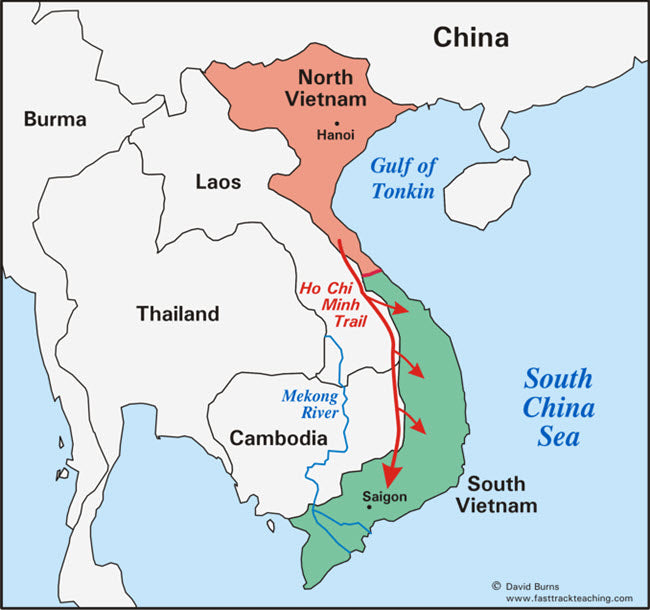
On June 25, 1950, the North Korean forces crossed the 38th parallel and invaded South Korea. On June 27, 1950, President Truman commited U.S. troops to a combined UN effort to stop the North Vietnamese. The Chinese and Soviets supported North Korea, including pilots and aircraft to fight the Americans.
Anxious to get into the fight, Major Bolt traveled to Seoul, South Korea to visit the 4th Fighter-Interceptor Squadron under the command of Colonel Royal N. Baker. The colonel refused Bolt's request to fly in a combat unit, but when Bolt was sent to the 51st Fighter-Interceptor Wing at Suwon Air Base as an observer he met with an old acquantince from El Toro by the name of George I. Ruddell. Ruddell agreed to let Bolt join his unit as part of another officer exchange.
This apparently angered some of his commanders in VMF-115, and Bolt had to complete a requisite six weeks of duty with the wing prior to its next R&R. Six weeks later, Bolt turned down his R&R, and joined the 39th Fighter-Interceptor Squadron flying the F-86 Sabre. Ruddell paired Bolt up with 1st Lt. Joseph C. McConnell, who would go on to be the top Ace in the Korean War.
Major Bolt and Lt. McConnell quickly established a close friendship in spite of Bolt's rank, and Bolt attributed his success in Korea to McConnell's guidance. Ruddell sent a request to the commander of the Fifth United States Air Force, asking that Bolt's tour with the squadron be extended. The request was granted, and Bolt and McConnell began going into combat together as wingmen in MiG Alley, the area where air-to-air combat was most frequent.

Maj. John F. Bolt, the USMC's first "Jet Ace", in F-86, 1953: Seated in a U.S. Air Force F-86E "Sabre" jet fighter. He named his F-86 Sabre jet "Darling Dottie" after his wife.
In May McConnell rotated back to the United States, and Bolt was given charge of the flight. Over the next 16 combat missions and 27 combat hours, Bolt's flight had never encountered any MiG fighters. But, on May 16th this changed when the flight was attacked by a group of MiG fighters at 45,000 feet.
Bolt was tailed by one of the MiGs, but managed to elude it, instead tailing another MiG himself. After several well placed shots the pilot bailed out leaving his aircraft to its own destiny. Six days later another MiG attacked Bolt, and he managed to outmaneuver and shoot it down at 7,000 feet. On June 24th he flew his 31st combat mission during which Bolt engaged one MiG and shot it down near the Yalu River. Seven days later, on June 30th, while flying in the same area Bolt encountered yet another MiG and quickly shot it down. By the end of the month he was credited with four victories and two aircraft "damaged."
On July 11, 1953, Bolt led a flight of four on a reconnaissance mission, but two of the aircraft returned to base because they were low on fuel, leaving Bolt and his wingman to continue the patrol. Soon they spotted four MiGs taking off from Antung airfield on the Chinese side of the Yalu River. Despite being low on fuel, Bolt ordered an attack and made a head-on dive towards the climibing MiGs, downing one with four machine gun bursts.
Bolt then banked his aircraft and aimed at the second aircraft scoring hits on its fuselage. The pilot bailed out, and the remaining two MiGs fled. This brought Bolt's tally to six confirmed victories. Bolt became the final Marine aviator to be awarded the Navy Coss during the war, and was the only non-USAF pilot to become an ace in the F-86. He was also the only naval aviator to become an ace in two different wars.

Bolt disembarks from his F-86 Sabre in Korea several days after his fifth and sixth victories in July 1953.
The Navy Cross
"The Navy Cross is presented to John F. Bolt.(0-13522) Lt Colonel, U.S. Marine Corps for extraordinary heroism in connection with military operations against an armed member of the united Nations while attached to the First Marine Aircraft Wing and serving as a pilot of a plane in the THIRTY NINTH Fighter-Interceptor Squadron, Fifth Air Force, in action against enemy aggressor forces in the Republic of Korea on 11 July 1953. Sighting four hostile jet interceptors immediately after the second section of his four-plane flight was forced to retire from the area because of a low fuel supply during a reconnaissance mission deep in enemy territory. Major Bolt quickly maneuvered his aircraft and that of his wingman into attack position and deliberately engaged the numerically superior enemy in a head-on firing run, destroying one of the hostile planes with his initial burst of fire. Although his fuel supply was dangerously low, he initiated repeated attacks on the remaining enemy aircraft and severely damaging the engine section of the lead interceptor, routinely pressed his attack against the crippled plane until the enemy pilot was forced to bail out. By his exceptional courage and superb airmanship in destroying the two aircraft, Major Bolt raised his total of enemy jet planes destroyed during the Korean War to six, thereby becoming the first jet ace in Marine Corps aviation. His inspiring leadership and great personal valor reflect the highest credit upon himself and was in keeping with the highest traditions of the United States naval Service."
Life After The Marine Corps
After retiring from the Marine Corps John Bolt began a new career in agriculture when he and his wife moved back to Sanford, Florida. In 1967 he decided to resume his original career aspiration to be a lawyer. He enrolled in the College of Law at the University of Florida, where his son Robert was also in attendance. Even though the program had a three year curriculum, he completed his degree in 27 months and graduated with a Juris Doctor degree in December 1969.
Later Bolt and his wife moved to New Smyrna Beach, Florida, and began a private law practice while becoming a local property owner. He specialized in real estate law, and was described as a "softspoken, kind, gentle person who would go out of his way to help a friend or a stranger." His son Robert became a lawyer in Tampa, Florida, and his daughter Barbara wrote for Reader's Digest.
Bolt died of acute lukemia in Tampa on September 8, 2004, after fleeing the approaching Hurrican Frances. At the time of his death he was the last surviving of the seven Americans to become aces in both World War II and Korea. He was survived by his wife and children, as well as two grandchildren.
I hope you enjoyed this trip through some of the history of aviation. If you enjoyed the story, please share it with all of your friends. And, if you are new to this blog, sign up to receive your own weekly blog post here: Subscribe here!
Until next time, keep your eyes safe and focused on what's ahead of you, Hersch!




Written by John M. White

Search this site
Recent Posts
-
The Perfect Gift Ideas for Pilots: From Sunglasses to Aircraft Models
October 03, 2026 -
Why Are Aircraft Wood Models Popular Among Collectors?
October 03, 2026 -
Jimmie Angel, Aviator, Explorer, Prospector
September 19, 2026 -
Imagine Finding Yourself In A Freefall from 28,000 Feet!
July 31, 2026
Leave a comment
This site is protected by hCaptcha and the hCaptcha Privacy Policy and Terms of Service apply.