
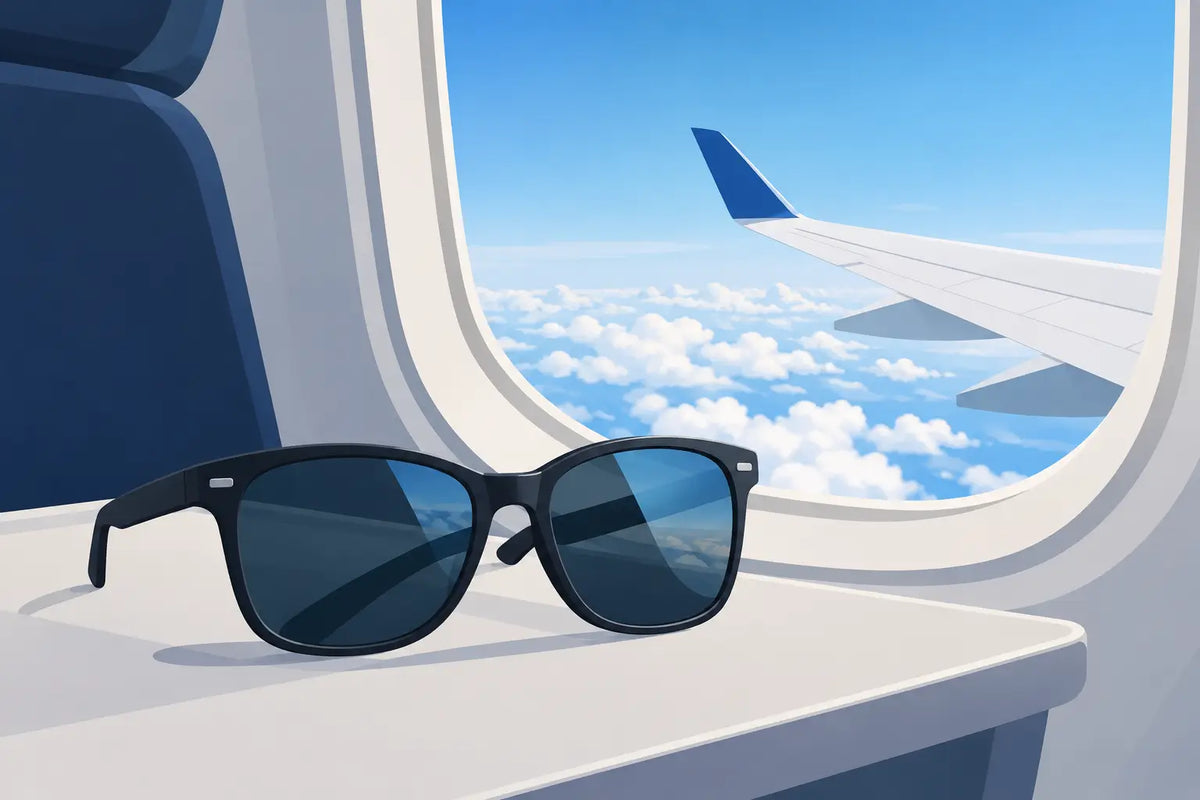
Are Polarized Sunglasses Safe for Flying?
A pair of polarized sunglasses can make glare disappear on the water or highway, then make a perfectly usable cockpit display look nearly black when you move your head. That is why the answer to “are polarized sunglasses safe for flying” is more nuanced than a simple yes or no. They protect your eyes from UV when properly rated, but polarization can introduce cockpit-specific visibility issues that most pilots would rather avoid.
For routine aviation use, a high-quality non-polarized lens is usually the smarter choice. It delivers the glare control, contrast, and comfort pilots need without interfering with the screens, windscreens, and visual cues that matter in flight.
Why polarization works so well on the ground
Polarized lenses contain a filter designed to block horizontally reflected light. That is the intense glare bouncing off water, wet pavement, snow, vehicle hoods, and other broad flat surfaces. For fishing, boating, and driving, the effect can be dramatic: less squinting, better comfort, and an easier time seeing through reflected light.
The issue is not that polarization is poor technology. It is highly effective technology used in the wrong environment for many pilots. Aircraft cockpits have a different visual workload than a boat deck or a highway. You are scanning outside for traffic and weather, checking instruments, reading moving-map information, and looking through layered materials such as a windshield or canopy. A lens that selectively blocks reflected light can alter some of those views.
Are polarized sunglasses safe for flying in a cockpit?
Polarized sunglasses are not inherently unsafe in the sense that they damage your eyes or make flight impossible. Some pilots fly with them and report no problem in a particular aircraft. The concern is operational: they can make critical visual information harder to see at exactly the wrong moment.
The most common problem is with liquid crystal displays. Many avionics screens, tablets, electronic flight bags, smartphones, and older LCD instrument displays use polarized filters themselves. When the lens filter and display filter are positioned at opposing angles, the screen can dim significantly or disappear. Turn your head slightly and it may reappear. Move again and it can go dark.
That effect varies by display, screen orientation, and the angle of your head. A setup that looks acceptable during a preflight check may become difficult to read after you shift in the seat, bank the aircraft, or glance down through a different part of the lens. In a busy terminal environment or while managing an abnormal situation, that is not a compromise worth accepting.
Polarization can also reveal stress patterns in aircraft windscreens, canopies, and laminated windows. These patterns may appear as dark patches, rainbow bands, or irregular areas of distortion. They are often easier to notice in certain light conditions and with certain windshield materials. While seeing the patterns does not necessarily mean the windshield has a problem, it can be distracting and may complicate your ability to assess what you are seeing outside.
There is a third consideration. Polarized lenses can reduce the visibility of glare-based cues on wet runways, standing water, ice, and other reflective surfaces. Those cues are not the only way a pilot evaluates a surface, but removing any useful visual information is a poor trade when a purpose-built non-polarized lens is readily available.
A dark lens is not the same as a polarized lens
This distinction matters when shopping for aviation sunglasses. Lens darkness controls how much visible light reaches your eyes. Polarization controls the direction of light that passes through the lens. UV protection is a separate performance category altogether.
A quality gray or brown non-polarized lens can provide excellent sun reduction and full UV protection without the display conflicts associated with polarization. For most pilots, that is the sweet spot. You can protect your eyes from high-altitude sunlight, reduce discomfort from cockpit glare, and retain a consistent view of avionics and the windshield.
Gray lenses preserve color perception well, making them a dependable all-around choice for bright conditions. Brown, copper, and amber-based lenses can improve contrast and depth perception, which some pilots prefer for variable light, haze, terrain, and changing cloud layers. The right choice depends on where and when you fly, but neither requires polarization to perform well.
Do not assume a very dark lens offers better protection. A lens should have reliable UV protection regardless of tint. Excessively dark lenses may also be unsuitable for low-light operations, overcast days, or late-afternoon flying, when your eyes need enough light to read charts, panels, and exterior cues comfortably.
The cockpit test that matters before takeoff
If you already own polarized sunglasses, test them in the actual aircraft before relying on them. Put them on and view every screen you use: primary flight display, multifunction display, engine monitor, GPS, transponder, tablet, and phone. Turn your head naturally from side to side, not just straight on. Check the windshield or canopy in bright daylight as well.
That test can tell you whether a pair is workable in one aircraft, but it does not turn polarization into the preferred aviation option. Cockpit hardware changes. A tablet mounted vertically may behave differently when moved to a horizontal mount. A rental aircraft may have different avionics. Even the same display can look different as cockpit light changes.
Pilots who move between aircraft, fly professionally, or use electronic flight displays regularly benefit from reducing variables. Non-polarized aviation sunglasses remove one potential source of ambiguity from an already demanding environment.
What to look for in aviation sunglasses instead
The best flying sunglasses should earn their place in the cockpit through optical clarity, protection, and comfort rather than a fashion label. Look for lenses with dependable UV protection and a neutral, distortion-free optical view. Lens material and coating quality matter because small optical imperfections become tiring during long flights and constant instrument scans.
Frame fit is equally important. Thick temples can create pressure points under an aviation headset and can interfere with the ear seals, increasing cabin noise. Thin, flexible temples designed for headset use are often more comfortable on long legs. A frame should stay stable when you look down at a checklist or over your shoulder during a clearing turn, without pinching your temples.
Consider your typical mission, too. A pilot who flies bright, high-altitude daytime routes may prioritize a darker gray lens. A pilot who spends more time in haze, variable weather, or lower-light conditions may favor a contrast-enhancing brown or copper tint. Prescription needs add another layer, since lens thickness, frame wrap, and optical center placement can affect comfort and clarity.
At Aviator Sunglasses, the goal is not to sell every lens technology to every customer. It is to help pilots select eyewear that makes sense for the way they actually fly, including frame fit under a headset and lens performance around modern avionics.
When polarized lenses can still make sense
Polarized sunglasses may still be an excellent second pair for life outside the cockpit. Anglers benefit from reduced surface glare when spotting fish. Boaters appreciate the comfort on open water. Drivers may find wet-road glare less fatiguing. If those activities are central to your routine, owning polarized eyewear is reasonable.
The practical answer for many pilots is two pairs: non-polarized sunglasses reserved for flying, and polarized sunglasses for water, road, or recreational use. That approach avoids forcing one lens technology to perform equally well in two environments with very different visual demands.
Can I use polarized sunglasses with analog gauges?
You may have fewer issues in an older cockpit with mostly analog instruments, but the windshield and outside-cue concerns remain. Many pilots also use a tablet, portable GPS, or phone even in an analog-panel aircraft. If any of those screens dim behind polarized lenses, the advantage disappears quickly.
Do photochromic lenses solve the problem?
Not necessarily. Photochromic describes a lens that changes tint with light exposure; it does not tell you whether the lens is polarized. A photochromic lens can be non-polarized and aviation-friendly, but it should still be evaluated for its activation speed, darkness in the cockpit, and performance behind UV-filtering windshields.
Is there ever a reason to choose polarization for flying?
Only after careful testing in your specific aircraft and display setup, and even then, it is generally a compromise rather than the first recommendation. For a pilot who relies on clear, repeatable access to cockpit information, non-polarized lenses provide the more predictable view.
Your sunglasses should reduce workload, not create a new item on the preflight checklist. Choose a non-polarized, optically precise lens that stays comfortable beneath your headset, protects against UV exposure, and lets you see every display and visual cue with confidence.

Written by John M. White

Search this site
Recent Posts
-
The Perfect Gift Ideas for Pilots: From Sunglasses to Aircraft Models
October 03, 2026 -
Why Are Aircraft Wood Models Popular Among Collectors?
October 03, 2026 -
Jimmie Angel, Aviator, Explorer, Prospector
September 19, 2026 -
Imagine Finding Yourself In A Freefall from 28,000 Feet!
July 31, 2026



Leave a comment
This site is protected by hCaptcha and the hCaptcha Privacy Policy and Terms of Service apply.