
Aviation Lens Review for Better Cockpit Vision
A serious aviation lens review cannot stop at how dark a pair of sunglasses looks on the ramp. The right lens must preserve detail through a windscreen, reduce fatigue during long legs, protect against ultraviolet exposure at altitude, and let you read the instruments without fighting glare or distortion. A lens that feels excellent behind the wheel or on the water can still be the wrong tool in a cockpit.
That is why pilots should judge lenses by the conditions they actually fly in: aircraft type, panel design, typical weather, flight duration, and whether prescription correction is involved. There is no single best aviation lens for every pilot. There are, however, clear performance standards that separate purpose-built eyewear from generic dark sunglasses.
What an Aviation Lens Must Do Well
The first job is optical clarity. Pilots continuously shift focus between the panel, charts or an EFB, traffic, runway markings, and distant terrain. A quality lens should deliver a clean, stable view across its usable area, without the waviness, edge distortion, or color cast that makes the eyes work harder.
UV protection is equally non-negotiable. At altitude, UV exposure increases, and a bright windscreen environment can mean long, cumulative exposure. Look for lenses marked for 100% UVA and UVB protection or UV400 protection. Lens darkness alone does not prove UV protection. A dark lens without proper filtration may encourage the pupil to open while allowing harmful UV through.
Glare control is the next major consideration, but it needs context. Reflections from clouds, water, pavement, and the aircraft structure can be distracting. A good aviation lens reduces uncomfortable brightness while retaining the contrast needed to see traffic, changing weather, terrain, and instrument information. The goal is not merely a darker view. It is a more useful one.
Finally, an aviation lens needs dependable construction. A scratch-resistant hard coat, an anti-reflective treatment on the back surface, and a lens material suited to the frame all matter. Backside reflections are especially annoying when bright light enters from behind or beside the pilot. They can create ghost images on the inside of the lens at exactly the wrong time.
Aviation Lens Review: Polarized or Non-Polarized?
This is the question most pilots ask first, and the honest answer is: it depends on the cockpit.
Polarized lenses are very effective at cutting reflected glare from flat surfaces. They are a strong choice for fishing, boating, driving, and many bright outdoor activities. In an aircraft, though, polarization can interfere with some LCD and avionics displays. Depending on head position and display orientation, the screen may darken, shift color, or become difficult to read. Polarization can also alter the appearance of stress patterns in certain windscreens.
For that reason, many professional and recreational pilots prefer non-polarized lenses for regular flight operations. A non-polarized gray, brown, or green lens with quality backside anti-reflective coating often delivers a more predictable cockpit view. It manages bright conditions without introducing display compatibility concerns.
That does not make polarized eyewear inherently unsuitable for every pilot. If you fly an aircraft with displays you have personally tested, or you want one pair primarily for non-flying outdoor use, polarization may be the right fit. Just do not assume a lens that excels on the water will automatically excel behind an avionics panel.
Choosing the Right Lens Color
Lens color affects contrast, color perception, and comfort. It should be selected for your flying environment rather than personal style alone.
Gray lenses for neutral color recognition
Gray is the most neutral option. It reduces overall brightness while preserving natural color balance, which is useful when identifying signal colors, runway environment cues, and weather changes. Pilots who fly in consistently bright conditions and want minimal color shift often start with gray.
A gray lens is particularly practical for those who move between aviation and general outdoor use. The trade-off is that it may not enhance contrast as much as a brown or copper lens during hazy, flat-light, or variable-weather conditions.
Brown and copper lenses for contrast
Brown, amber, and copper-based lenses can enhance contrast and depth perception in changing light. They can make terrain definition, cloud edges, and visual detail feel more distinct, which explains their popularity with pilots, golfers, and outdoor athletes.
The trade-off is a warmer view and some alteration of color perception. For many pilots, that is a worthwhile exchange, especially in hazy daylight or over terrain where contrast matters. For others, especially those who want the most neutral possible view of the panel and outside environment, gray remains the better choice.
Green lenses as a balanced option
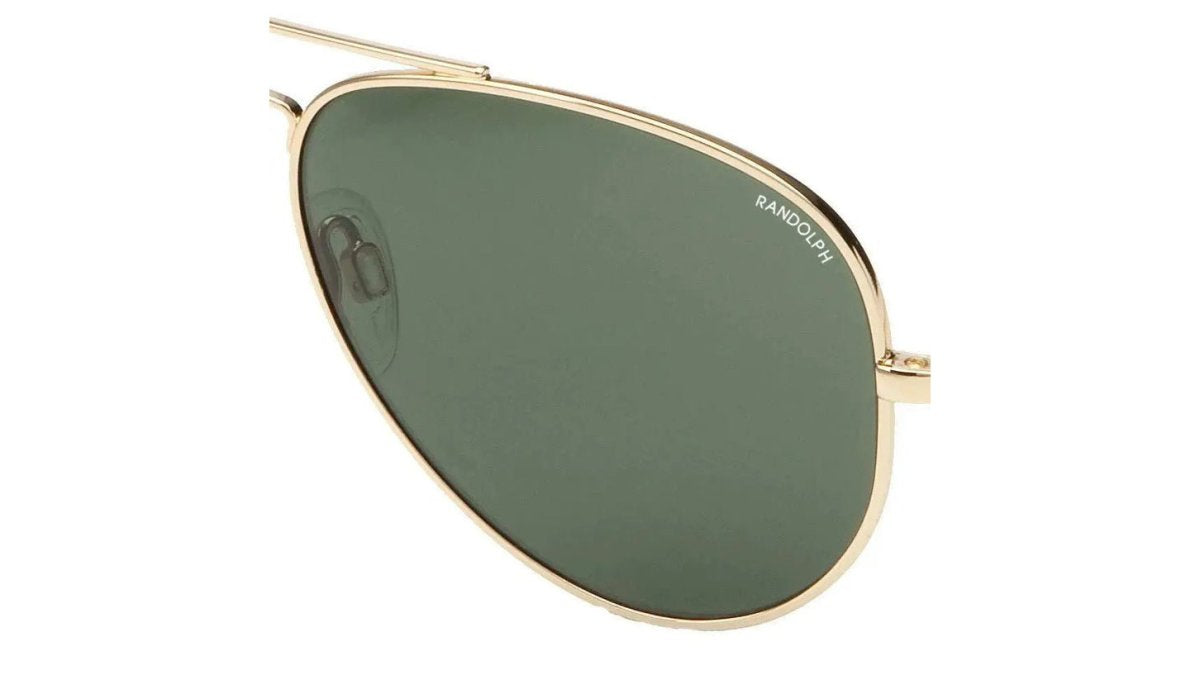
Traditional green tints occupy a useful middle ground. They moderate brightness effectively while maintaining relatively natural color recognition and comfortable contrast. A green lens can be an excellent all-purpose aviation choice for pilots who do not want the flatter feel of gray or the warmer cast of brown.
The exact performance still depends on the manufacturer’s lens formulation. Two lenses described as green can have noticeably different transmission levels, coatings, and contrast characteristics. Tint names are a starting point, not a complete specification.
Fixed Tint, Photochromic, and Gradient Lenses
A fixed-tint lens is the most predictable option for bright daytime flying. Its transmission level does not change, so the view remains consistent from preflight to shutdown. For pilots who spend long periods in full sun, a fixed gray, brown, or green lens remains hard to beat.
Photochromic lenses change darkness based on UV exposure. They are useful when moving between the hangar, ramp, vehicle, and aircraft, particularly for pilots who need prescription eyewear all day. The limitation is that many windscreens block a significant amount of UV, so photochromic lenses may not darken as fully inside the cockpit as they do outdoors. Heat and temperature also influence their response.
Gradient lenses are darker at the top and lighter at the bottom. Some pilots appreciate the darker upper portion for bright skies while retaining a lighter view toward the panel. Others prefer a uniform tint because it provides more consistent protection and does not require them to alter their head position. This is a personal preference, but it should be tested with your normal seating posture and instrument scan.
Lens Material and Coatings Matter More Than They Seem
Glass lenses can offer exceptional optical clarity and excellent scratch resistance, but they are heavier and less practical for many headset-wearing pilots. For long flights, that added weight can become noticeable at the bridge of the nose and temples.
Polycarbonate is lightweight and impact resistant, making it a common choice for active use. Its optical quality varies by manufacturer, so a premium polycarbonate lens is not the same experience as a low-cost convenience-store lens. Trivex is another strong option, valued for light weight, impact resistance, and very good visual clarity.
Whichever material you choose, prioritize a durable hard coat and backside anti-reflective treatment. Front-surface mirror coatings can reduce visible light transmission and add exterior style, but they should not be the deciding factor. The lens performance inside the cockpit matters more than the mirror color outside it.
Prescription Aviation Lenses Require Extra Care
Prescription pilots have more variables to manage. A strong prescription can affect lens thickness, edge clarity, frame selection, and available lens technologies. Wraparound frames may be difficult or inappropriate for some prescriptions because the curve can introduce unwanted optical effects unless the lens is specifically designed for that geometry.
Progressive lenses also deserve a real cockpit trial. They can be highly effective, but the placement of the intermediate and near zones must support your instrument scan, EFB use, and outside vision. A progressive layout that works well at a desk may not work well in a cockpit. Some pilots prefer dedicated single-vision distance sunglasses, while others benefit from occupational or customized progressive designs.
This is where direct, human fitting guidance has value. At Aviator Sunglasses, the focus is not simply on choosing a premium brand. It is on matching the lens, frame, prescription, and intended mission so the eyewear works when workload is high.
A Practical Way to Make the Final Choice
Start with your primary mission. If you fly daylight VFR in a glass-cockpit aircraft, a non-polarized lens with reliable UV protection, backside anti-reflective coating, and a neutral or contrast-enhancing tint is usually the sensible baseline. If you also fish or spend substantial time on the water, a separate polarized pair may serve you better than forcing one lens to handle two very different visual environments.
Then consider the cockpit itself. Test whether your preferred lens affects displays, check for windscreen reflections, and wear the frame under your usual headset for more than a few minutes. A lens can be technically excellent but still be the wrong choice if the frame creates pressure points or the tint leaves you uncomfortable after an hour in bright sun.
The best aviation lens is the one that gives you a calm, accurate view when light is harsh, visibility is changing, and there is no room for visual guesswork. Choose for the mission, test for your aircraft, and let real cockpit performance make the decision.

Search this site
Recent Posts
-
John J. Doran Jr. and the O-2A Over the Ho Chi Minh Trail
November 13, 2026 -
The Lost Squadron: How a P-38 Spent 50 Years Under Greenland's Ice
November 06, 2026 -
The Perfect Gift Ideas for Pilots: From Sunglasses to Aircraft Models
October 03, 2026 -
Why Are Aircraft Wood Models Popular Among Collectors?
October 03, 2026

Leave a comment
This site is protected by hCaptcha and the hCaptcha Privacy Policy and Terms of Service apply.