
Article: The Lost Squadron: How a P-38 Spent 50 Years Under Greenland's Ice
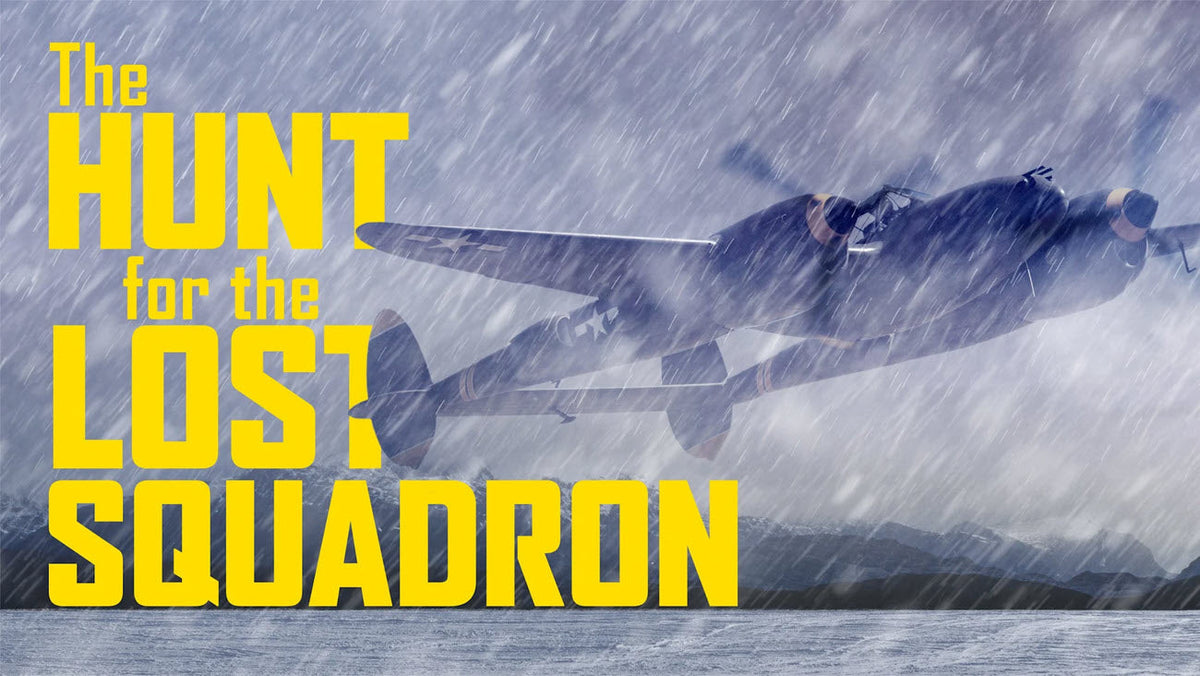
The Lost Squadron: How a P-38 Spent 50 Years Under Greenland's Ice
On July 15, 1942, eight warplanes circled over the Greenland ice cap with their fuel running low and nowhere to go. Below them was nothing but white, stretching in every direction. Lt. Brad McManus, the pilot with the least fuel left, went in first. He put his P-38 down with the wheels extended, the nose gear dug into the snow, and the Lightning flipped onto its back.
McManus crawled out with a cut arm. The pilots above him had seen enough. The rest of the formation came down on their bellies, and every one of them walked away. That was the beginning of the story of the Lost Squadron, the P-38s that disappeared into the ice for half a century, and the one that came back to fly again.
Operation Bolero and the northern ferry route
In the summer of 1942, the United States was racing to build up air power in England. The effort was called Operation Bolero, and it meant flying hundreds of brand-new aircraft across the North Atlantic. Fighters like the P-38 did not have the range to make that crossing in one hop, so they island-hopped: Labrador to Greenland, Greenland to Iceland, and Iceland to Britain, usually with a B-17 along to handle the navigation.
This flight was six new P-38F Lightnings from the 94th Fighter Squadron of the 1st Fighter Group, shepherded by two B-17s. One of the bombers was named "Big Stoop." The fighters flew in two groups of four aircraft, each led by a B-17.
On the leg toward Iceland, the weather closed in. The crews ran into thick cloud and icing, much of it at altitudes where the fighter pilots in summer flight gear felt the cold badly. They turned back for Greenland, only to find their landing field had closed behind them. With fuel getting critical and no runway in reach, the formation made the call to land on the ice cap.

A photograph of two WW II pilots with an aircraft and the pilot wearing a pair of AO Original Pilot sunglasses.
Nine days on the Greenland ice cap
All 25 men survived the landings. They sheltered in the two B-17s, which had room, radios, and some protection from the wind. The bombers had sent out distress calls on the way down, and help started organizing on the coast.

Kee Bird, a B-29 bomber that got badly lost and put down on a frozen Greenland lake in 1947. Credit: US Air Force
Supplies were airdropped on the third day. On July 24, a rescue party with a dog sled reached the stranded crews. From there the men hiked about 10 miles across the ice to the coast, where a Coast Guard cutter picked them up. In all, they spent nine days on the ice cap.
The airplanes stayed behind. Nobody was going to fly six fighters and two bombers off a glacier in 1942, and the war needed the men far more than it needed the wreckage. Over the next five decades, Greenland's snow did what it always does. It piled up, year after year, and the Lost Squadron vanished beneath it.
Fifty years of searching for the Lost Squadron P-38s
The planes were never completely forgotten. In 1981, two aviation enthusiasts, Pat Epps and Richard Taylor, formed the Greenland Expedition Society to find them. They expected the tails of the B-17s to be poking up out of the snow. They were wrong.
Epps made trip after trip to the ice cap, seven expeditions over 11 years, using radar and eventually a steam probe. What the team finally learned surprised everyone. The aircraft were buried under roughly 260 feet of solid ice, about as deep as a 25-story building is tall. The slow creep of the glacier had also carried them more than a mile from where they landed.
The first B-17 they reached was crushed flat by the weight of the ice. A fighter, built smaller and tougher, had a better chance.
Bringing Glacier Girl home
In the summer of 1992, the team went after a P-38. Kentucky businessman Roy Shoffner funded the expedition, which cost around half a million dollars. Warbird restorer Bob Cardin led the crew on the ice.
The method was as remarkable as the find. A heated probe melted a shaft about four feet across down through the ice, and pumps cleared the meltwater. At the bottom, the crew carved out a cavern around the airplane. They took the P-38 apart rather than cutting it, then hauled the pieces up the shaft one by one. The parts were flown off the ice cap by ski-equipped DC-3.

The first attempt to locate these WWII aircraft was unsuccessful but Epps was determined to succeed. Epps was an active member of, and eventually led, the Greenland Expedition Society (GES) team on another six trips to the ice cap over the next 11 years. (Image credit: © 1989–2026 Luciano A. Sapienza)
The Lightning was the one flown in 1942 by Lt. Harry Smith. It was crushed and battered, but it was there. By 1993 it was in Middlesboro, Kentucky, where restoration began.
The work took about ten years. In October 2002, the P-38 flew for the first time since the day it landed on the ice. It got a fitting name: Glacier Girl.
In 2007, the airplane's new owner, Rod Lewis, set out to finish the mission. A flight called Operation Bolero II left New Jersey in June bound for an airshow in Duxford, England. Glacier Girl made it to Goose Bay, Labrador, before engine trouble ended the crossing. After repairs she flew home, still 65 years short of England.

Lewis Air Legends Lockheed P-38F Lightning "Glacier Girl"
Today Glacier Girl flies with Lewis's collection of warbirds and still appears at airshows across the United States. She is the only member of the Lost Squadron to fly again. In 2018, another search team located a second squadron P-38 more than 300 feet down, so the story may not be finished yet.
Aviation buffs and pilots love all these stories about aviation history, and a gentleman by the name of Ralph Wetterhahn is an aviation archaeologist and author who has a long history of researching historical aviation artifacts. You can find our article "Ralph Wetterhahn, Aviation Archaeologist and Author" in our blog posts.
Gear that had to work
The Lost Squadron pilots trusted their lives to equipment that had to work in conditions nobody planned for: deep cold, endless glare off the ice, and hours of squinting through cloud for any sign of land. Eye protection was a serious part of that kit. American Optical made the first sunglasses the Army Air Corps contracted for its pilots, back in 1935, and pilots of that era flew behind their lenses.
That same heritage is still built into the AO Eyewear pilot sunglasses we carry today, with true glass lenses made for clear, accurate vision in the cockpit.
If you get the chance to see Glacier Girl at an airshow, take it. Few airplanes have been through as much, and fewer still came back from 260 feet under the ice to tell about it.
I hope you enjoyed this trip through some of the history of aviation. If you enjoyed the story, please share it with all of your friends. And, if you are new to this blog, sign up to receive your own weekly blog post here: Subscribe here!
Until next time, keep your eyes safe and focused on what's ahead of you, Hersch!




Written by John M. White


Search this site
Recent Posts
-
The Perfect Gift Ideas for Pilots: From Sunglasses to Aircraft Models
October 03, 2026 -
Why Are Aircraft Wood Models Popular Among Collectors?
October 03, 2026 -
Jimmie Angel, Aviator, Explorer, Prospector
September 19, 2026 -
Imagine Finding Yourself In A Freefall from 28,000 Feet!
July 31, 2026


Leave a comment
This site is protected by hCaptcha and the hCaptcha Privacy Policy and Terms of Service apply.