
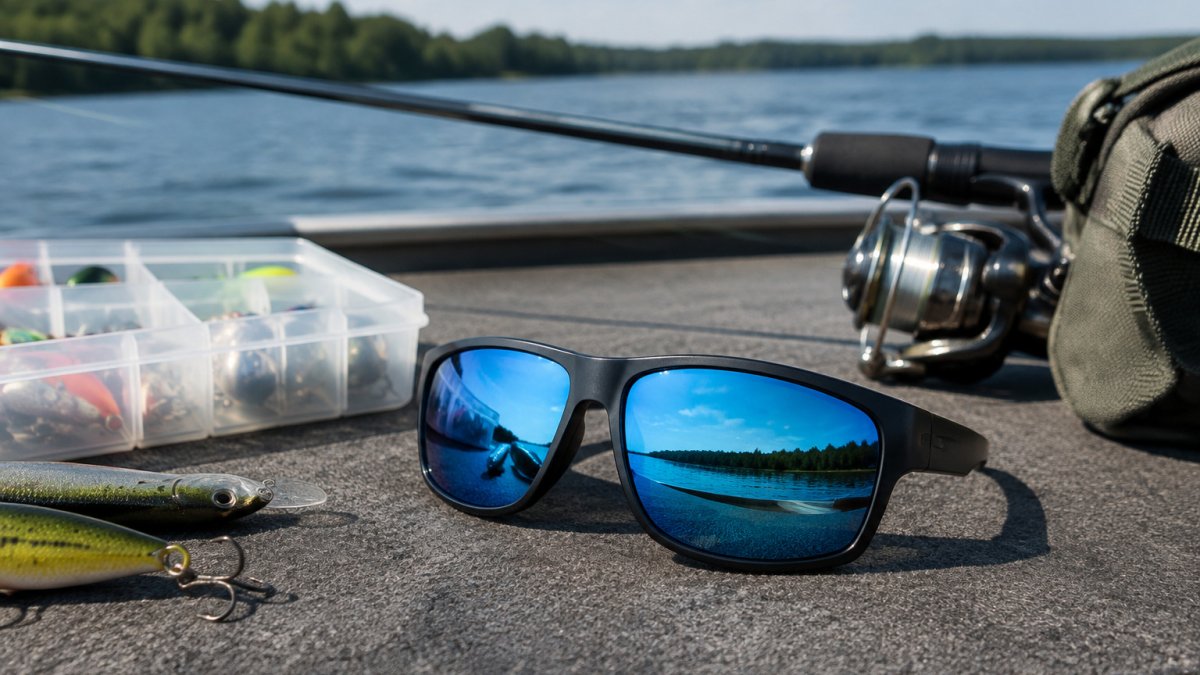
9 Best Sunglasses for Fishing Clarity in 2026
Quick Summary
The clearest fishing view comes from lens material and tint working together, not polarization alone. Mineral glass offers the most optical precision, while a polarized bronze or gray tint gives the best contrast for sight fishing. Match the tint to your water and light for the best fishing clarity.
- Mineral glass gives the most optical clarity and the best scratch resistance.
- Bronze or copper tint boosts contrast in stained water and sight fishing.
- Gray or green tint suits bright, clear flats with truer color.
- Aim for 10-20% visible light transmittance in bright conditions, 25-40% in low light.
- Built-in prescription lenses start at +$220.00 for single vision.
Table of Contents
- Why Fishing Clarity Depends on Lens Quality, Not Just Polarization
- Best Polarized Sunglasses for Fishing: Our Top Picks
- Mineral Glass vs. Resin: Which Lens Gives the Clearest View?
- What Tint of Sunglasses Is Best for Fishing?
- Best Sunglasses to See Fish in Water
- Best Sunglasses for Fishing and Boating
- Clarity Under Real Conditions: Bright Sun, Overcast Skies and Stained Water
- Wearing Fishing Sunglasses Over Prescription Glasses
- Choosing Your Pair: Fit, Care and Your Next Step
- Frequently Asked Questions
Why Fishing Clarity Depends on Lens Quality, Not Just Polarization
Last Updated: November 8, 2026
Most anglers assume that any polarized pair will help them see fish. The reality is more specific. Aviator Sunglasses has built its selection around one principle: the clearest view on the water comes from lens material and tint working together, not from polarization alone. Polarization cuts surface glare, but the glass or resin in front of your eyes decides how sharp and true the underwater view looks.
Lens material matters because it affects optical distortion, scratch resistance, and how much weight sits on your face through a long day. Mineral glass is the reference standard for optical precision. Resin is lighter and more impact-resistant. Each has trade-offs, and the right pick depends on how you fish.
Watch out: a polarized lens that is cheap or poorly ground can add its own distortion, which makes fish harder to pick out, not easier.
American Academy of Ophthalmology guidance on UV-blocking eyewear
Best Polarized Sunglasses for Fishing: Our Top Picks
Our top pick for fishing clarity is the Scheyden Albatross. It uses 63mm hand-ground, polished mineral glass lenses with a 7-layer non-polarized and 8-layer polarized coating stack, and it carries 17% visible light transmittance for bright conditions. The titanium frame is ultralight, and it comes with a 3-year limited warranty.
The Scheyden Mustang is the other strong choice for the water. Its hand-ground optical glass is built to camera-lens standards, and its 8-layer polarized construction targets glare from reflective surfaces. A titanium frame keeps weight low through a full day on the boat.
The Scheyden C-130 gives you three frame finishes and true mineral glass lenses. The polarized version is listed for fishing, boating, and cycling. It starts at $309.00.
The Waylite starts at $129.00. It is a composite Wayfarer-style frame with ultra-thin temples and anti-slip silicone nose pads.
Best for: anglers who want optical precision and are willing to pay for mineral glass. Skip if: you need the lowest possible price and do not mind resin lenses.

| Model | Starting Price | Lens Material | Best For |
|---|---|---|---|
| Scheyden Albatross | $309.00 | Mineral glass | Clarity-focused fishing |
| Scheyden Mustang | $309.00 | Hand-ground optical glass | Glare control on the water |
| Scheyden C-130 | $309.00 | Mineral glass | Premium all-round use |
| Scheyden Jet-A | $179.00 | RSR resin or mineral glass | Lighter, lower-cost option |
| Waylite | $129.00 | Composite frame | Budget and light weight |
Starting Price
Mineral Glass vs. Resin: Which Lens Gives the Clearest View?
Mineral glass offers the most optical clarity and the best scratch resistance. The Scheyden Avalon Small, for example, is built with mineral glass lenses.
Resin, such as the RSR Razor Sharp Resin used in the Scheyden Jet-A, is lighter and close to glass in clarity. For many anglers, the difference will be small.
If your priority is the sharpest possible view of fish in shallow water, pick mineral glass. If you spend long hours wearing your glasses and weight matters more, resin is a sound choice.
What Tint of Sunglasses Is Best for Fishing?
Tint is the second half of the clarity equation. Polarization removes surface glare, but the tint decides which wavelengths reach your eye and how much contrast you get between a fish and the bottom. Two lenses with identical polarization can produce very different underwater views.
Here is how the common fishing tints actually behave:
- Bronze / copper: Boosts contrast in the red-orange part of the spectrum. It can suit stained water, variable light, and sight fishing where you need to separate a fish from a muddy or grassy bottom. It warms the scene slightly, which some anglers dislike in very bright sun.
- Gray: The most color-neutral option. It darkens the scene evenly without shifting hues, which suits bright, clear flats and open-water days. Gray gives the truest color rendition but less contrast punch in low light or stained water.
- Green / G-15-style: A middle ground. Green reduces glare while preserving some contrast, and it is a common pick for freshwater and mixed conditions. It sits between gray and bronze on the contrast scale.
- Amber / yellow: Very high contrast, very high light transmission. Useful at dawn, dusk, and under heavy overcast, but too bright for full sun and poor at cutting glare on bright water.
- Rose / vermilion: Enhances contrast against blue-green backgrounds, which can help in open blue water and against sky reflections. Less useful in green-stained inland water.
A practical way to choose is to match tint to water color and light, not to brand marketing:
| Water / light condition | Best tint | Why |
|---|---|---|
| Clear water, bright sun | Gray or green | Neutral color, even darkening |
| Stained or tannic water | Bronze / copper | Lifts contrast in low-light water |
| Overcast or dawn/dusk | Amber or light bronze | High transmission, contrast boost |
| Bright flats, sight fishing | Bronze or gray | Contrast plus glare control |
| Open blue water | Gray or rose | True color, sky-glare control |
Visible light transmittance (VLT) matters as much as hue. A bronze lens at 12% VLT behaves very differently from a bronze lens at 30% VLT. For bright conditions, most anglers do well in the 10-20% range; for overcast and low light, 25-40% is more usable. The Scheyden Albatross is listed at 17% visible light transmittance for bright conditions.
Watch out: a dark lens is not automatically a clear lens. A very dark tint in shallow water can hide fish that a lighter bronze lens would reveal, because it cuts too much of the light carrying the contrast you are trying to read.
If you only buy one, bronze is the more versatile starting point for mixed inland fishing, while gray is the safer single choice for clear, bright flats.
Best Sunglasses to See Fish in Water
Sight fishing depends on contrast. Polarization removes the surface glare that hides fish, and lens tint helps separate a fish from the bottom. In practice, a polarized bronze or gray lens on a clean optical base gives the most reliable view.
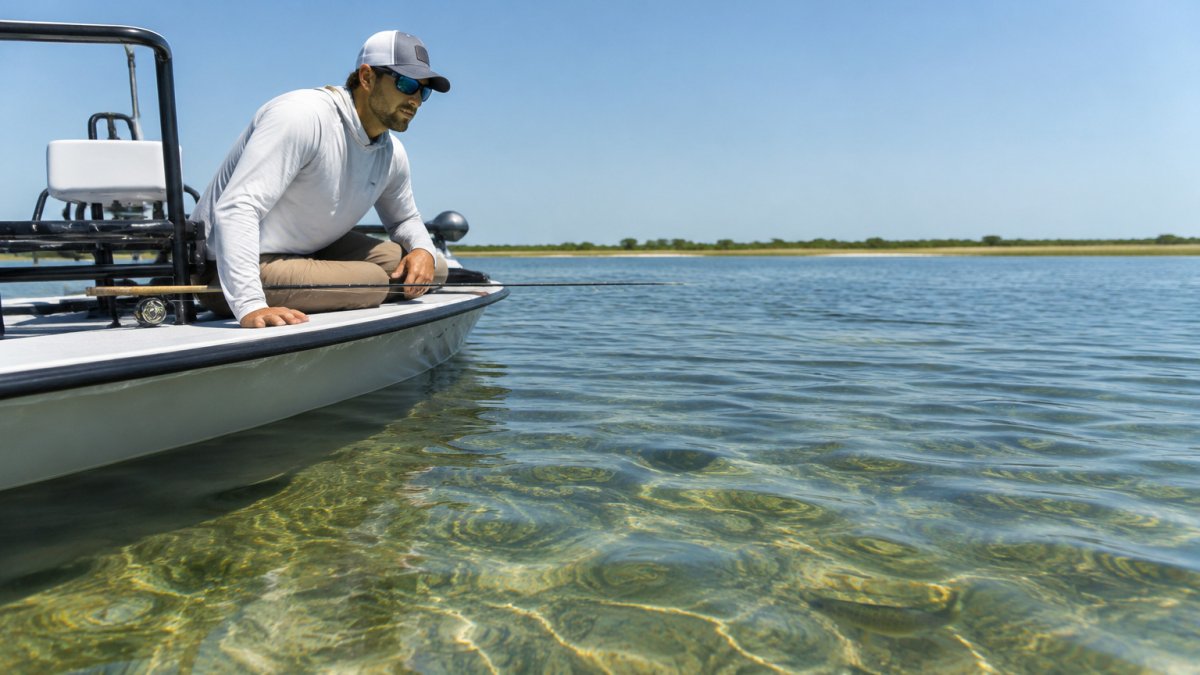
The Scheyden Albatross and Mustang both list polarized options. Non-polarized frames are recommended for pilots, golfers, and drivers.
Do not assume darker means better. Very dark lenses can hide fish in shallow water.
Best Sunglasses for Fishing and Boating
Boating adds spray, wind, and long hours in glare. Look for a secure fit, a frame that stays put, and lenses that handle salt and sun. The Scheyden C-130 and Avalon Small both have soft, fully adjustable silicone nose pads.
Fit matters more on water than most people expect. A frame that slides down your nose in a wave will cost you the clearest view.
Clarity Under Real Conditions: Bright Sun, Overcast Skies and Stained Water
Most sunglass guides describe clarity in the abstract. A more useful approach is to compare lenses under the specific conditions anglers actually fish, because the same lens that excels on a bright flat can fall apart under overcast skies or in stained water.
Bright sun, clear water. The limiting factor is glare, not light. A gray or green lens in the 10-15% VLT range cuts the intense surface reflection and lets you see into the water without squinting. High-contrast bronze lenses can over-warm the scene here and reduce color accuracy, which matters when you are reading bottom composition. The clearest view in bright sun usually comes from a neutral tint on a low-distortion glass base, not from the darkest lens available.
Overcast skies. Light is flat and diffuse, so glare is lower but contrast is also lower. A bronze or amber lens in the 25-35% VLT range lifts the contrast between fish and background. A dark gray lens that worked at noon can make the water look like a flat gray sheet under clouds. This is the condition where tint choice changes clarity the most.
Stained or tannic water. The water itself absorbs light, so the lens should not subtract more. A lighter bronze or copper lens with higher transmission helps you pick out structure and fish shapes in tea-colored water. Very dark lenses are counterproductive here.
Changing light through the day. Dawn and dusk favor higher-transmission amber or light bronze. Midday favors gray or green. Anglers who fish full days often carry two pairs or two lenses rather than compromise on one tint.
How to compare clarity yourself. Product descriptions are not a reliable clarity test, so use a repeatable method:
- Stand at the same spot on the water or dock with each lens.
- Pick a fixed target, a submerged rock, a weed edge, a marked fish-shaped object, at a set distance.
- Note how quickly you can identify the target, how sharp its edges look, and whether colors shift.
- Repeat at the same time of day and in the same light so the comparison is fair.
- Check for distortion by looking at a straight edge (a dock piling, a rod, a horizon line) and slowly panning, bending or swimming at the edges signals a poorly ground lens.
This kind of side-by-side test tells you more about clarity than any spec sheet, because it measures what your eye actually resolves through the lens in real water and real light.
Watch out: testing lenses in a shop under artificial light tells you almost nothing about water performance. Fluorescent and LED lighting have different spectra than sunlight, and indoor tests hide glare behavior entirely.
The practical takeaway is that clarity is condition-specific. A lens that is clearest in bright sun is rarely the clearest under clouds or in stained water, so match the lens to the water you fish most and keep a second tint for the conditions you encounter on the days that matter.
Wearing Fishing Sunglasses Over Prescription Glasses
If you need corrective lenses, you have two options. You can wear fishing sunglasses over your own glasses, or you can order sunglasses with prescription lenses built in. Built-in prescription lenses usually give you a sharper view and a better fit.
Aviator Sunglasses offers single vision, bifocal, and progressive prescription options on several models. Prescription lenses add to the price: single vision is +$220.00, bifocal is +$260.00, and progressive is +$300.00. Call 866-440-2461 to add a prescription to your order. Prescription orders are non-returnable once lenses are cut.
Guidance on choosing prescription eyewear
Choosing Your Pair: Fit, Care and Your Next Step
Start with the water you fish most. Choose mineral glass if clarity is your top priority, resin if weight matters more, and a polarized bronze or gray lens for most sight fishing. Check the fit, since a frame that slips will hurt your view.
Clean your lenses with a soft cloth and rinse off salt before wiping. Avoid rubbing grit across the surface, because scratches reduce clarity over time.
Ready to choose? Explore the Aviator Sunglasses range, where each pair is built for clear, comfortable vision on the water.
Frequently Asked Questions
What sunglasses have the best polarization for fishing?
Polarized lenses with a high-quality filter cut the glare off the water surface so you can see below it. The Scheyden Mustang and Albatross use 8-layer polarized construction, which Aviator Sunglasses lists as its polarized option for fishing, boating and outdoor use. Look for a lens that states its polarization level and is free of distortion, since a clean optical surface matters as much as the filter itself.
What tint of sunglasses is best for fishing?
Bronze or brown tints add contrast and depth perception, which helps when you are reading shallow water, weed lines and structure. Gray tints give more natural color and suit bright, open water. For most anglers working variable light, a bronze lens is the practical choice, and the Scheyden Albatross and C-130 are offered in bronze or gray glass.
Are glass or polycarbonate lenses clearer for fishing?
Mineral glass lenses give the clearest optical view and resist scratches better than resin. The Scheyden Avalon Small and C-130 use mineral glass, and the Mustang and Albatross use hand-ground optical glass that Aviator Sunglasses describes as 6x more scratch-resistant than polycarbonate. Glass is heavier than resin, so weigh clarity against comfort for long days on the water.
Do polarized sunglasses help you see fish underwater?
Yes. Polarization reduces surface glare, which lets more light from below the surface reach your eyes, so you can spot fish, structure and bottom features more easily. The effect is strongest when the sun is at an angle to the water. For sight fishing in clear water, polarized lenses are the most important feature to prioritize.


Search this site
Recent Posts
-
The Lost Squadron: How a P-38 Spent 50 Years Under Greenland's Ice
November 06, 2026 -
The Perfect Gift Ideas for Pilots: From Sunglasses to Aircraft Models
October 03, 2026 -
Why Are Aircraft Wood Models Popular Among Collectors?
October 03, 2026 -
Jimmie Angel, Aviator, Explorer, Prospector
September 19, 2026


Leave a comment
This site is protected by hCaptcha and the hCaptcha Privacy Policy and Terms of Service apply.